
Schillinger’s Kennel Mystery
The CallerThis flow traces the evidence around the kennel escape and the conflict between Schillinger’s certainty, the dogs’ return, and the possibility of sabotage.
increasing Bearing strength in each event
 decreasing
Bearing strength in each eventdecreasingA Trusted Routine
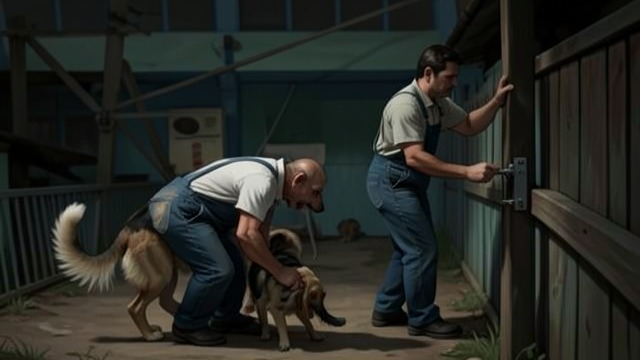
A Trusted Routine
Three familiar actions
Schillinger says he closes the kennel gate, pushes the bolt, and flips the latch after feeding or caring for his dogs. He describes the procedure as a reflex built through years of experience.
Responsibility becomes identity
The dogs are central to his life, and he presents himself as a meticulous owner. His confidence in routine is also the basis of his belief that an escape must have been caused by someone else.
The routine matters because it sets a clear standard against which the empty kennel will later be judged.
The Dogs Return Bloody
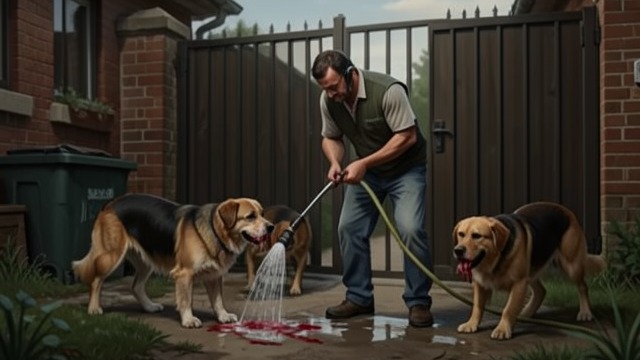
The Dogs Return Bloody
Evidence of a hunt
Schillinger returns to find the kennel open and the dogs dispersed. Several come back with blood around their mouths, and he assumes they have killed an animal.
A hurried cleanup
He gathers the dogs and hoses them down, hoping to remove the blood before anyone arrives. He shuts the gate and insists he cannot have forgotten his normal procedure.
The cleaning may be an attempt to regain control, but it also complicates the evidence. The owner’s actions after the escape become part of the investigation.
A Death Reported
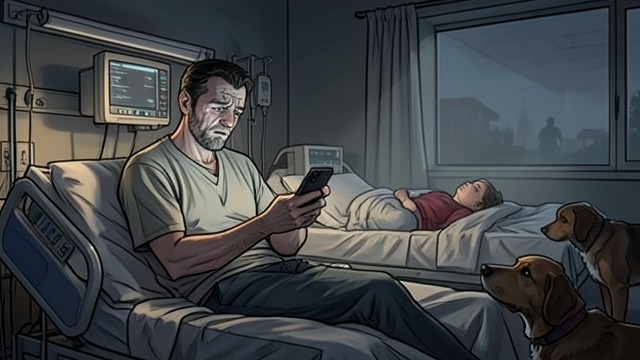
A Death Reported
A terrible possibility becomes fact
Sejer tells Schillinger that a child has died and that the dogs are suspected. Schillinger goes pale and immediately asks whether he will lose the animals.
Denial and panic
He insists that his dogs cannot be responsible and points toward another possible owner. When police explain that the other dogs are away, his defense narrows to the claim that someone opened his gate.
The confrontation exposes both genuine shock and self-preservation. Schillinger may be innocent of deliberate release, but he remains responsible for the conditions that allowed the dogs to range free.
A Community Finds A Scapegoat
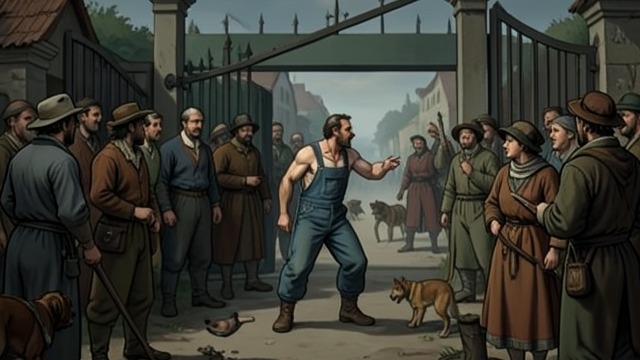
A Community Finds A Scapegoat
Competing accounts circulate
Some residents accept Schillinger’s claim of sabotage and defend his long history as a dog owner. Others consider the known prankster responsible or simply want the dogs and owner removed.
Certainty outruns proof
The community’s grief and anger encourage simple explanations, even though police have not established who opened the gate. Schillinger’s reputation becomes a subject of public judgment before a court has heard the case.
The conflict is not only about dogs; it is about who carries responsibility when evidence is incomplete and the consequences are irreversible.
A Trial Still Ahead
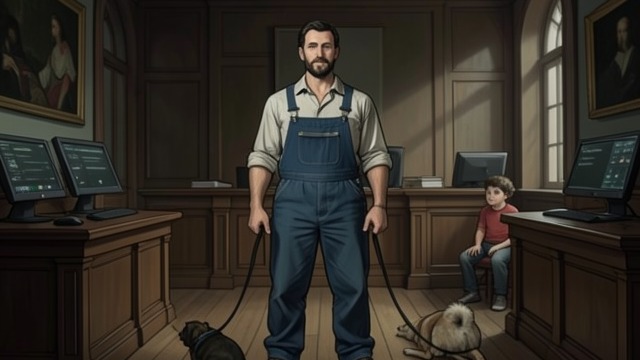
A Trial Still Ahead
Legal responsibility remains open
Schillinger is expected to stand trial and hopes for reasonable doubt. The police have investigated the kennel, but the question of deliberate sabotage has not been settled.
A permanent loss
Whatever the legal outcome, Theo is dead and the dogs have been removed for examination. The family and community cannot return to the moment before the gate was found open.
The unresolved case contrasts legal procedure with the desire for immediate certainty. The novel ends without a verdict that can repair the damage.
before the afternoon of the attack
the evening Theo disappears
after police identify the likely attackers
the weeks after Theo’s death
near the end, with trial scheduled for January
